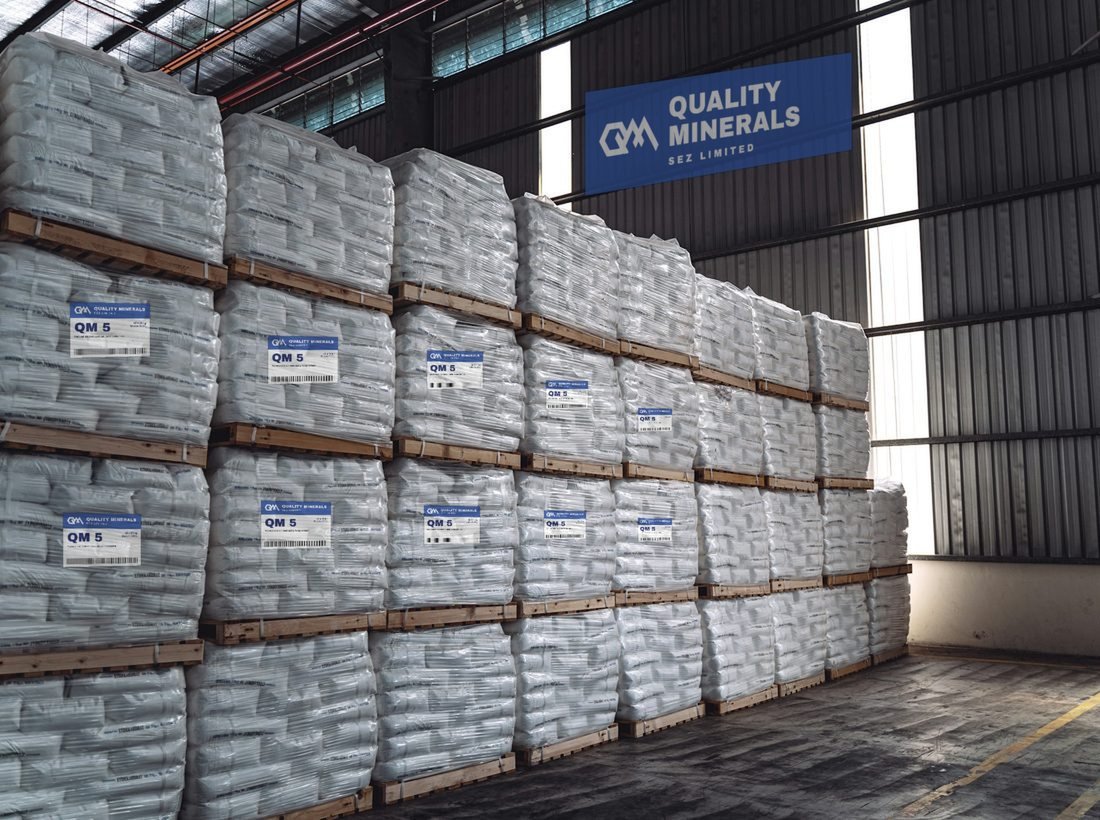
Calcium carbonate, CaCO3, is one of the most common minerals on earth and one of the most useful in industry. Ground fine, it becomes a white powder that makes products cheaper, stronger, brighter or easier to make. Here are the industries that use it most.
1. Paints and coatings
It is the main extender in most decorative paint. It builds body, helps opacity and lets formulators use less titanium dioxide.
2. PVC pipe and profiles
It adds stiffness to rigid PVC, lowers compound cost and helps the melt flow evenly through the extruder.
3. Plastics and masterbatch
Carried in filler masterbatch, it goes into polyethylene and polypropylene film, moulded parts and woven bags.
4. Paper
As a filler and coating pigment it raises brightness and opacity and replaces costly fibre.
5. Rubber
Soles, mats, belts and hoses use it to lower compound cost and control tack.
6. Adhesives and sealants
It controls shrinkage and viscosity and fills gaps cleanly.
7. Construction chemicals
Wall putties, tile adhesives and grouts depend on clean, well-graded calcium carbonate.
8. Wires and cables
It fills PVC insulation and sheathing compounds and does not burn.
9. Non-woven fabrics
It softens and whitens spunbond fabric and cuts resin use.
10. Glass
It is a source of calcium in glass batches, where low iron matters most.
11. Oil and gas drilling
In drilling fluids it bridges and weights the mud, and dissolves in acid when the job is done.
Choosing a grade
What decides the right grade is particle size: the median (D50) and the top cut (D97). Our grade finder shows all eleven of our grades side by side, and every one has its own data sheet.