Calcite powder, whiting, chalk and limestone powder: what is the difference?
Suppliers sell the same white mineral under half a dozen names. What each one means, and what to check whatever it is called.
Ask five suppliers for calcium carbonate and you may be offered calcite powder, whiting, chalk powder, marble powder and limestone powder. They are all calcium carbonate. The names say more about the stone and the trade than about the product.
The names
Calcium carbonate: the chemical name, CaCO3.
Ground calcium carbonate (GCC): natural stone that has been milled to a powder.
Calcite powder: a common trade name, from calcite, the mineral form of calcium carbonate.
Whiting: an old trade name for fine white calcium carbonate used in paint and putty.
Chalk powder: strictly, ground chalk, a soft, fine-grained form of limestone; often used loosely for any calcium carbonate.
Limestone powder: ground limestone; may be industrial grade or a coarser agricultural lime.
Marble powder: ground marble, a harder, crystalline form.
What to check, whatever the name
The name tells you little. The data sheet tells you everything: calcium carbonate content, brightness, the median particle size (D50), the top cut (D97), moisture and oil absorption. Ask for those figures before you compare prices.
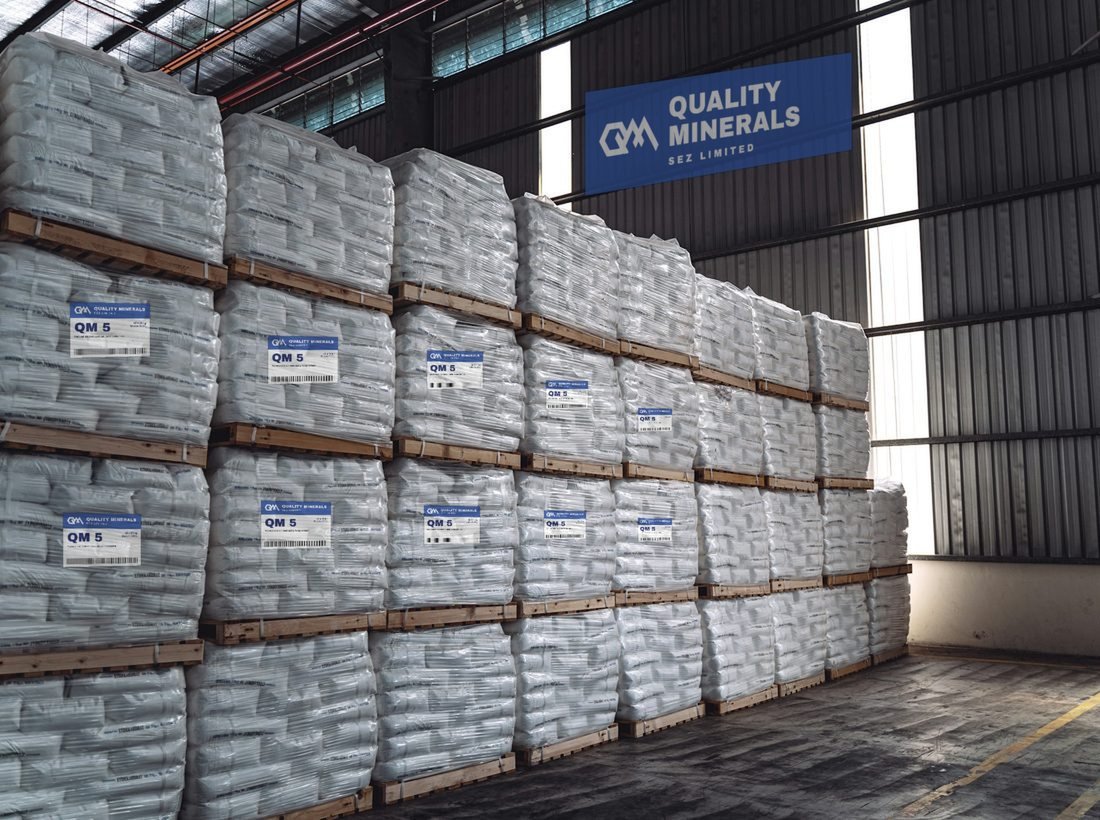
Our grades are natural ground calcium carbonate from limestone with at least 99.6% CaCO3. Every grade has its own technical data sheet.
From the paint on your wall to the pipe under your street, calcium carbonate is one of the most widely used minerals in manufacturing. Here is where it goes and why.
Both are calcium carbonate. One is mined and milled, the other is made in a reactor. How they differ, and when ground calcium carbonate is the better buy.